NAD(P)H-Glo™ Detection System
Monitor the Concentration of Reduced Forms of NADH and NADPH
- Highly sensitive and rapid bioluminescent assay
- Easily adapted for high-throughput format
- Simple add-mix-measure protocol

Catalog Number:
Size
Catalog Number: G9061
Catalog Number: G9062
The NAD(P)H-Glo™ Detection System is a bioluminescent, homogeneous, single-reagent-addition assay that quantitatively monitors the concentration of the reduced forms of NADH and NADPH levels in enzymatic reactions. The oxidized forms, NAD+ and NADP+, are not detected and do not interfere with quantitation.
The assay is rapid, requiring only a 40- to 60-minute incubation, has a broad linear range (25nM-50µM) and high signal-to background ratio (~400). Low nanomolar sensitivity, 25nM, allows direct in-well detection. The assay is well suited to measuring NAD(P)H production or consumption in high-throughput formats.
Assay Chemistry
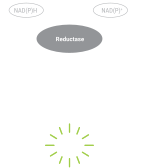
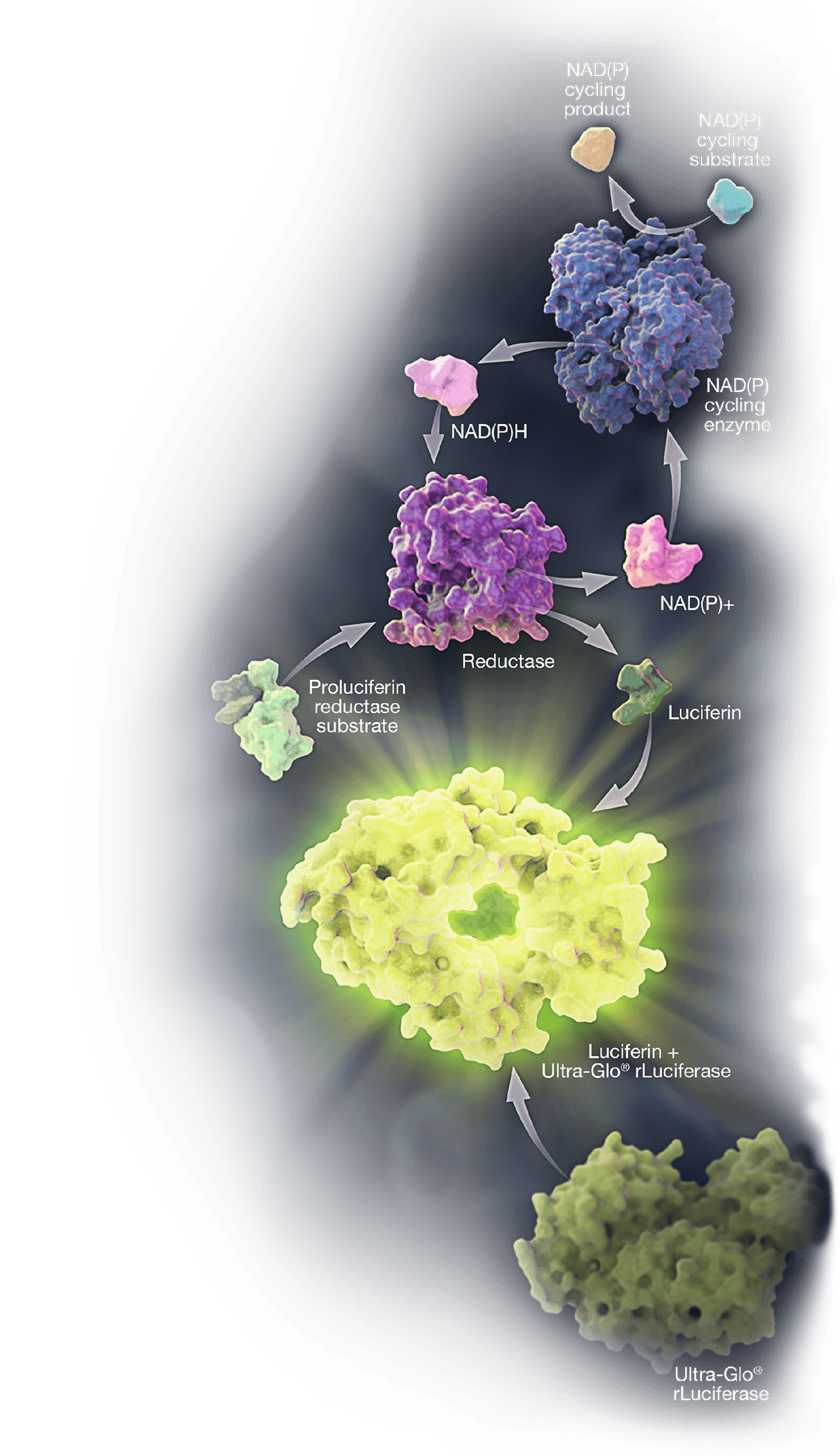
In the presence of NAD(P)H, a reductase reduces the proluciferin reductase substrate to form luciferin. Luciferin is quantified using Ultra-Glo™ Recombinant Luciferase, which is a component of the Luciferin Detection Reagent, and the light signal produced is proportional to the amount of NAD(P)H in the sample.
Sensitive and Selective
The assay is selective for the reduced forms of NADH and NADPH levels in enzymatic reactions.
Compatible with High-Throughput Systems
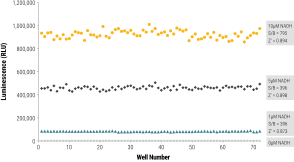
The simple add-and-read protocols are compatible with automated and high-throughput workflow, and the flexible chemistries adapt to 96-, 384- and 1,536-well plate formats and high-throughput systems. They yield Z′ values >0.7.
Assays were performed using 8µl of the indicated concentration of NADH with 8µl of the appropriate Luciferin Detection Reagent in 384-well plates. S/B = signal-to-background ratio.
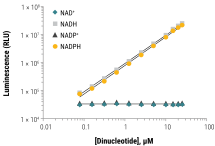
The NAD(P)H-Glo™ Assay detects only NADH and NADPH.
Case Study
Researchers at BioAscent have implemented the NAD(P)H-Glo™ Assay for HTS. In this project, Dr McElroy and his team used the NAD(P)H-Glo™ Assay to screen 50,000 compounds against a poorly characterized enzyme that is a potential drug target. NAD(P)H-Glo was chosen as it has high sensitivity, with a wide dynamic range and high signal-to-background ratios.

Protocols
Complete Protocol
Specifications
Catalog Number:
Contenido
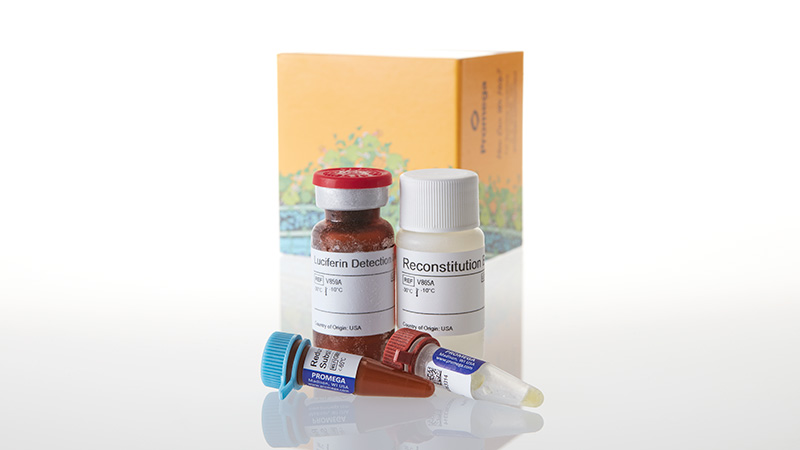
| Item | Part # | Presentación | Concentración |
|---|---|---|---|
Reductase |
G884A | 1 × 55μl | 6mg/ml |
Reductase Substrate |
G885A | 1 × 55μl | |
|
Luciferin Detection Reagent |
V859A | 1 × 1 each | |
|
Reconstitution Buffer |
V865A | 1 × 10ml |
SDS
Search for SDSCertificado de Análisis
Use Restrictions
For Research Use Only. Not for Use in Diagnostic Procedures.Condiciones de Almacenaje
U.S. Pat. Nos. 9,273,343 and 9,951,372, European Pat. No. 2751089, Japanese Pat. No. 6067019 and other patents pending.
Contenido
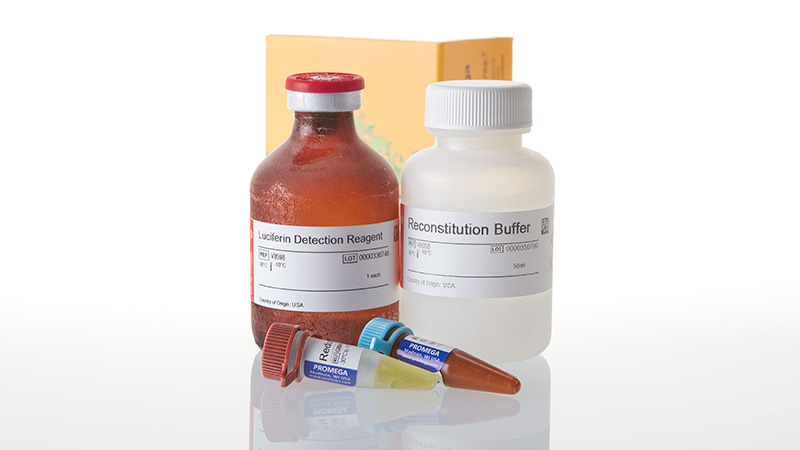
| Item | Part # | Presentación | Concentración |
|---|---|---|---|
Reductase |
G884B | 1 × 275μl | 6mg/ml |
Reductase Substrate |
G885B | 1 × 275μl | |
|
Luciferin Detection Reagent |
V859B | 1 × 1 each | |
|
Reconstitution Buffer |
V865B | 1 × 50ml |
SDS
Search for SDSCertificado de Análisis
Use Restrictions
For Research Use Only. Not for Use in Diagnostic Procedures.Condiciones de Almacenaje
U.S. Pat. Nos. 9,273,343 and 9,951,372, European Pat. No. 2751089, Japanese Pat. No. 6067019 and other patents pending.
Resources
Menciones
-
Secreted APE1/Ref-1 inhibits TNF-α-stimulated endothelial inflammation via thiol-disulfide exchange in TNF receptor.
2016
Sci. Rep.
-- -
Large-scale label-free comparative proteomics analysis of polo-like kinase 1 inhibition via the small-molecule inhibitor BI 6727 (Volasertib) in BRAFV600E mutant melanoma cells.
2014
J. Proteome Res.
-- -
Crystal structure of the emerging cancer target MTHFD2 in complex with a substrate-based inhibitor.
2017
Cancer Res.
-- -
Compensation for intracellular environment in expression levels of mammalian circadian clock genes.
2014
Sci. Rep.
-- - Ver todas las menciones
Related Products
Productos Similares
Nicotinamide Adenine Dinucleotide Cell-Based Assays
Ensayos bioluminiscentes sensibles para detectar los niveles de NAD(P)+ y NAD(P)H en las células.
G9071, G9072, G9081, G9082
Glucose Uptake-Glo™ Assay
Ensayo no radiactivo para medir la captación de glucosa.
J1341, J1342, J1343
Lactate-Glo™ Assay
Ensayo bioluminiscente que detecta rápidamente el lactato a partir de diversos tipos de muestras.
J5021, J5022
GSH/GSSG-Glo™ Assay
Ensayo homogéneo para cuantificar el glutatión total y los ratios de glutatión.
V6611, V6612
Usado con frecuencia junto con
RealTime-Glo™ MT Cell Viability Assay
Método bioluminiscente que permite monitorizar la cinética de viabilidad de cultivos celulares durante 72 horas.
G9711, G9712, G9713
GloMax® Discover System
Lector de microplacas de alto rendimiento para la detección de luminiscencia, fluorescencia y absorbancia.
GM3000
GloMax® Navigator System
Luminómetro para microplacas.
GM2000, GM2010